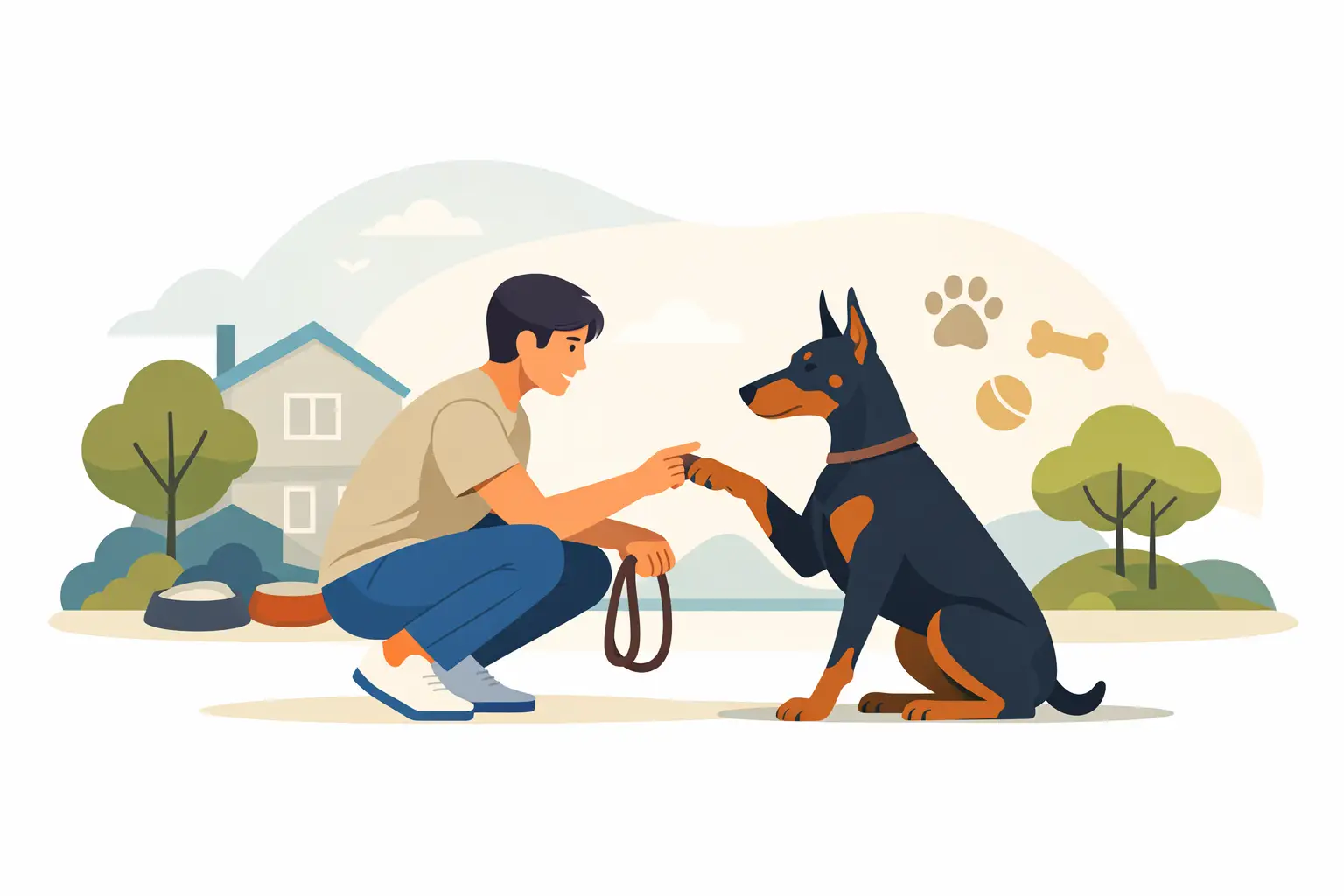
The first week with a Doberman puppy usually answers one question fast – are you ready for a smart, powerful dog that notices everything? This first time doberman owner guide is built for buyers who want clear expectations before they bring home a puppy. Dobermans are loyal, athletic, and highly trainable, but they are not a low-effort breed. If you want a dog that is alert, engaged, and deeply connected to its people, a Doberman can be an exceptional fit.
That said, success starts before pickup or delivery. A good first-time experience comes from choosing the right puppy, understanding the breed’s pace and energy, and making sure health records, registration details, and early care are already handled. When those basics are in place, you can spend less time troubleshooting and more time building a stable routine.
What first-time Doberman owners should know first
Dobermans are often described as protective, but that word can be misleading for new buyers. A well-raised Doberman puppy is not automatically a guard dog. What you are really getting is a highly observant companion with strong bonding instincts and a quick mind. That combination is a major advantage in training, but it also means your puppy will pick up on inconsistency fast.
This breed tends to do best with owners who are calm, direct, and organized. If rules change every day, a Doberman will test them. If training is clear and repeated, the same dog can become one of the most responsive companions you will own. That trade-off matters. Dobermans are not difficult because they are stubborn by default. They are difficult when structure is missing.
Size is another part of the equation. A Doberman puppy may come home small, but growth happens quickly. Adult size, strength, and activity level should shape your buying decision from the start. Families with young children, apartment renters, and first-time large-breed owners can still do well with this breed, but only if they are realistic about exercise, space, and supervision.
How to choose the right puppy
The best first time doberman owner guide is not just about training tips. It starts with choosing a puppy from a trusted source that gives you real information, not vague promises. You should be able to review core details such as age, gender, projected adult size, registration status, and price without chasing down basic answers.
Health preparation is where buyers should pay the closest attention. Up-to-date vaccinations, deworming, microchipping, and veterinarian health checks are not extras. They are part of a responsible, low-risk start. For a first-time owner, having those items completed before the puppy comes home removes a lot of uncertainty.
Documentation matters too. If a puppy is listed as AKC registered or eligible, that should be clear. Payment security matters. Delivery support matters. If you are buying from out of town, structured transport options can make the process much safer and more predictable than trying to piece things together on your own.
A trusted source like Apex Pet Home appeals to many first-time buyers for exactly that reason. The process is designed to be straightforward, with exceptional Doberman puppies presented through transparent listings and supported by health checks, microchipping, vaccinations, and white glove delivery options.
Setting up your home before your puppy arrives
A Doberman puppy does not need a complicated setup, but it does need a controlled one. Start with a crate, food and water bowls, a fitted collar, leash, chew toys, a bed, and cleaning supplies. Keep the layout simple. Too much freedom too early often leads to accidents, chewing, and overstimulation.
Crate training is especially useful with this breed. A crate gives your puppy a place to settle and helps with house training, travel, and routine. The key is to use it as a calm resting space, not a punishment tool. Dobermans are people-focused, so isolation without structure can create frustration.
You will also want to think ahead about floor surfaces, cords, furniture edges, and anything your puppy can grab during teething. Because Dobermans are fast learners, prevention works better than correction. If they never get used to bad habits, you do not have to spend months undoing them.
Feeding, exercise, and daily routine
First-time owners often make one of two mistakes with Dobermans – they under-exercise them or they overdo it too young. Puppies need regular play and short activity sessions, but their joints and growth plates are still developing. Long runs and repetitive impact are not the goal in early months.
A better approach is a steady routine built around age-appropriate movement, short leash walks, basic training sessions, feeding on schedule, and supervised rest. Doberman puppies burn energy quickly, but they also need recovery time. An overtired puppy can become mouthy, hyper, and harder to manage than one that simply needs more exercise.
Feeding should be consistent and based on your veterinarian’s guidance and the puppy’s age and size. Large-breed growth needs careful pacing. Too much food, too many treats, or frequent diet changes can create digestive issues and uneven growth. Keep meals predictable, monitor stool quality, and make changes gradually.
Training matters early with this breed
If there is one section every first-time owner should take seriously, it is this one. Dobermans are extremely trainable, but that does not mean training can wait. Early obedience work builds communication and control before your puppy becomes a strong adolescent.
Start with name recognition, crate comfort, potty routine, leash introduction, recall, sit, and down. Keep sessions short and repeat them often. This breed responds well to confident handling and clear reward-based training. Harsh corrections often backfire, especially with sensitive puppies that are still learning trust.
Socialization is just as important as obedience. Your puppy should experience different people, sounds, surfaces, and environments in a controlled way. The goal is not to force interaction with everyone. The goal is calm exposure so your Doberman learns that new things are normal, not threatening.
This is where many first-time owners need to be honest with themselves. A Doberman that misses early training and socialization can become difficult fast. A Doberman that gets structured guidance early can become stable, responsive, and easy to live with.
Health, vet care, and long-term planning
A good start lowers risk, but it does not replace ongoing care. Schedule your first local vet visit soon after your puppy arrives, even if health checks were already completed. That visit helps establish a baseline, confirm records, and keep your vaccine schedule on track.
Dobermans can be prone to certain breed-related health concerns, so long-term planning matters. Ask practical questions about health history, support after purchase, and what type of commitment stands behind the puppy. For first-time buyers, stronger health assurances are not just a marketing feature. They reduce uncertainty and help you make a more confident decision.
Microchipping is another detail that should already be in place or scheduled immediately. It is a simple safety measure, but one that matters even more with active, curious dogs. Registration paperwork, vaccine records, and purchase documentation should all be organized from day one.
Is a Doberman right for your household?
A Doberman can be a strong fit for families, couples, and single owners, but not every household wants the same dog. If you want a quiet pet that is content with limited interaction, this breed may feel too intense. If you want a companion that stays engaged, learns quickly, and forms a close bond, the fit can be excellent.
For buyers who work long hours away from home, planning is critical. Dobermans do not do well when ignored for most of the day. If you have a flexible schedule, help at home, or a clear training and care plan, the breed becomes much more manageable.
That is really the bottom line for first-time owners. Dobermans reward preparation. The smoother the buying process, the clearer the health information, and the more structured the routine, the better your experience will be.
Bringing home a Doberman puppy should feel exciting, not uncertain. When you choose carefully and start with a healthy, well-prepared puppy, you give yourself the best chance at a confident first ownership experience – and a very good dog that is ready to grow with you.